Clipse’s grand reentry
Clipse, after a 15+ year hiatus from the release of their last studio album, are back and maybe even better than ever.
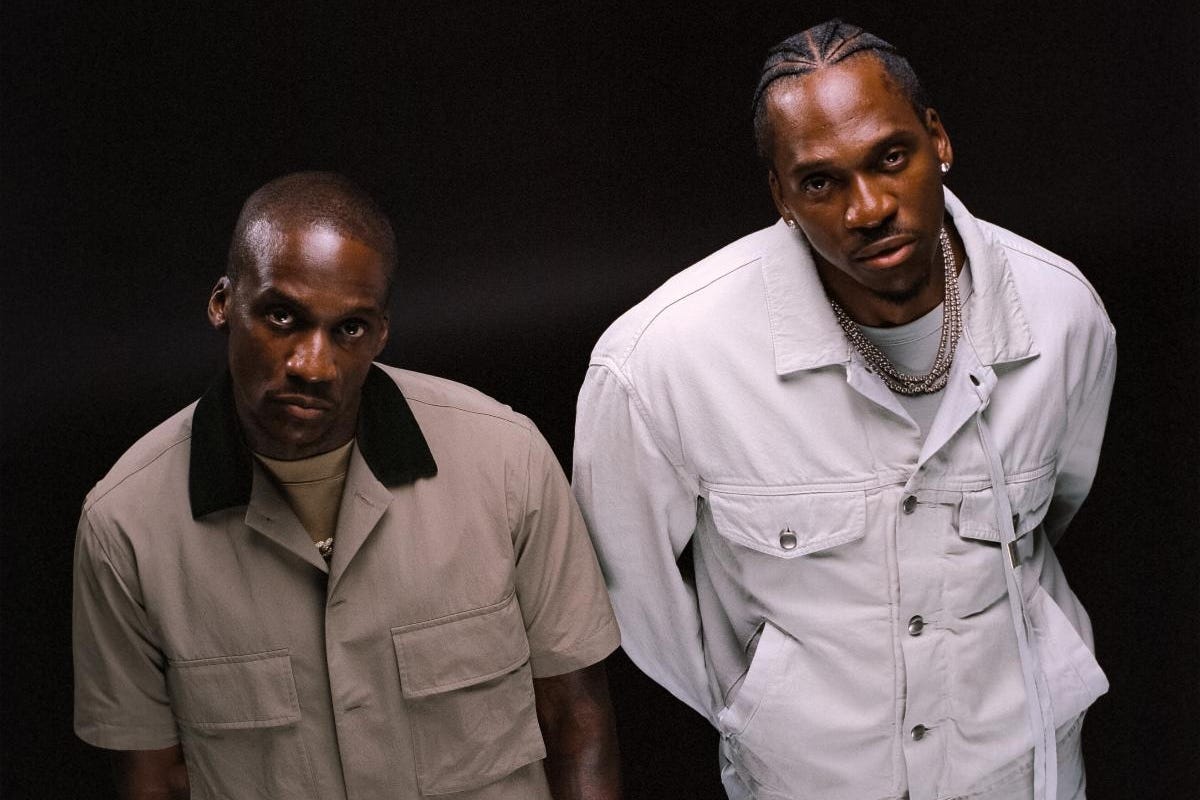
Seeing Clipse drop a full album in 2025 is like Vince Carter dunking at 40—it’s a testament to longevity and talent, but it could be seen more as a novelty than an indication of what’s good to come. The discrepancy between the two examples in this analogy is that Let God Sort Em Out is not a farewell tour, but a potentially conclusive championship season with a somewhat open ending. Who knows if Pusha T and No Malice (formerly Malice) will ever release an album, or music at all, together again, but let’s appreciate tentative greatness when it unfolds in front of us.
And unfold it has. Pusha T, not one for staying quiet even when unprovoked, took the reins of Clipse’s press blitzkrieg in anticipation for the project’s release. From calling Travis Scott, a former labelmate, “shameless” and “corny” to mocking repeat beef victim Drake for suing Kendrick Lamar over the Compton rapper’s diss tracks toward the Canadian, Clipse came back into hip-hop resuming their place as a pair of its elites. This sort of hyper-aggressive energy was maintained throughout the actual product as well. Continuing to dig into Scott, Pusha allocates a couple bars on “So Be It” directed at his failed relationship with Kylie Jenner–“You cried in front of me, you died in front of me/Calabasas took your b***h and your pride in front of me”–to pour salt into the wounds of Scott’s alleged duplicitousness. Pusha even grinds his own beef by attacking former Diplomat Jim Jones–an artist who is now multiple rungs beneath Pusha–for calling the Virginian overrated. A whole verse is reserved for Jones on “Chains & Whips,” including direct shots at Jones’ propensity for tacky clout-chasing, with lines like “Misery’s fuelin’ your regression/Jealousy’s turned into obsession/Reality TV is mud wrestlin’/Some signed checks, I know better than/Beware of my name, that there is delicate.” Based on this, Scott got off easy.
Drama included, Clipse returns to their old ways, both in style and substance, but not to readopt it. More like alluding to it to show that they’re not incapable of turning back the clock. Though, it is undeniable that they are new people who have undergone two decades of change. 20+ years which have seen them lose both of their parents, as heart-wrenchingly illustrated and narratively recounted on “The Birds Don’t Sing,” and which saw a hiatus between the two’s relationship. No Malice dove into religion while Pusha diverted into the arms of Kanye West at G.O.O.D Music. But roads have brought the two brothers, friends and co-workers back together on Let God Sort Em Out to collaboratively review the good and the bad of the time that has had to pass in order to reunite them.
But Let God Sort Em Out is not a simple return to form for the brotherly duo. Yes, Pharrell reappears as its sole producer, both in aesthetic and sonic vision, but he has grown as well. The Neptunes–along with former co-producer Chad Hugo–is not a relationship that has been mended like Clipse’s. And Pharrell’s creative independence has been marked by his dynamism outside of music, between his outpost as Creative Director of Louis Vuitton to his work with Adidas, where his first creative love of sound has been treated as a side passion in the past few years. But like Clipse, Pharrell realizes special circumstances when he sees them, effectively pulling out all the stops for the album, both in performances on the microphone and on the computer. Gone is the bling-era bounciness of a track like “When the Last Time” or the threats of a sing-rap chorus of Pharrell’s on “Hello New World,” Let God Sort Em Out instead gets the angelic high-notes and ethereal choirs of “So Far Ahead” and the balladic John Legend on “The Birds Don’t Sing.”
What has not changed is the trio’s ability to rise to the occasion that they set for themselves. Only Clipse and Pharrell could find the pockets to glide through a beat like “E.B.I.T.D.A.”’s and concoct a catchy chorus out of Econ-100 terminology. Whether kicking it old-school to express braggadocio on a track like this or praising allegiance to Willy Falcon (“Willy Falcon, trunk full of talcum here/Shotgun wit’ ya ex, feels like Malcolm’s near”) on “P.O.V.” with someone who praises allegiance to Clipse in Tyler, the Creator, Pusha and Malice transcend time by finding consistently new ways of talking about the same things. And when you watch interviews with the duo, you see the pride in their lyricism and mastery of the English language that makes rap seem like sport to them, in which they’re veteran legends.
Pusha and Malice achieve the incredible with Let God Sort Em Out. Too many rappers of multi-generational fame and prestige refuse to age with the times, but do so without innovating within their own niche. As we’ve seen with Pusha’s solo career, he nearly fell victim to the same fate with albums like Fear of God II: Let Us Pray (2011) and My Name Is My Name (2013), releases that felt like creative purgatory for a rapper who was advanced for his time but returned past his expiration date. Let God Sort Em Out not only extends this deadline but shows that the product is fresher than ever.