LeBron James’ new teammate: DraftKings
It's hard to describe James' partnership with DraftKings as anything but a conflict of interest.
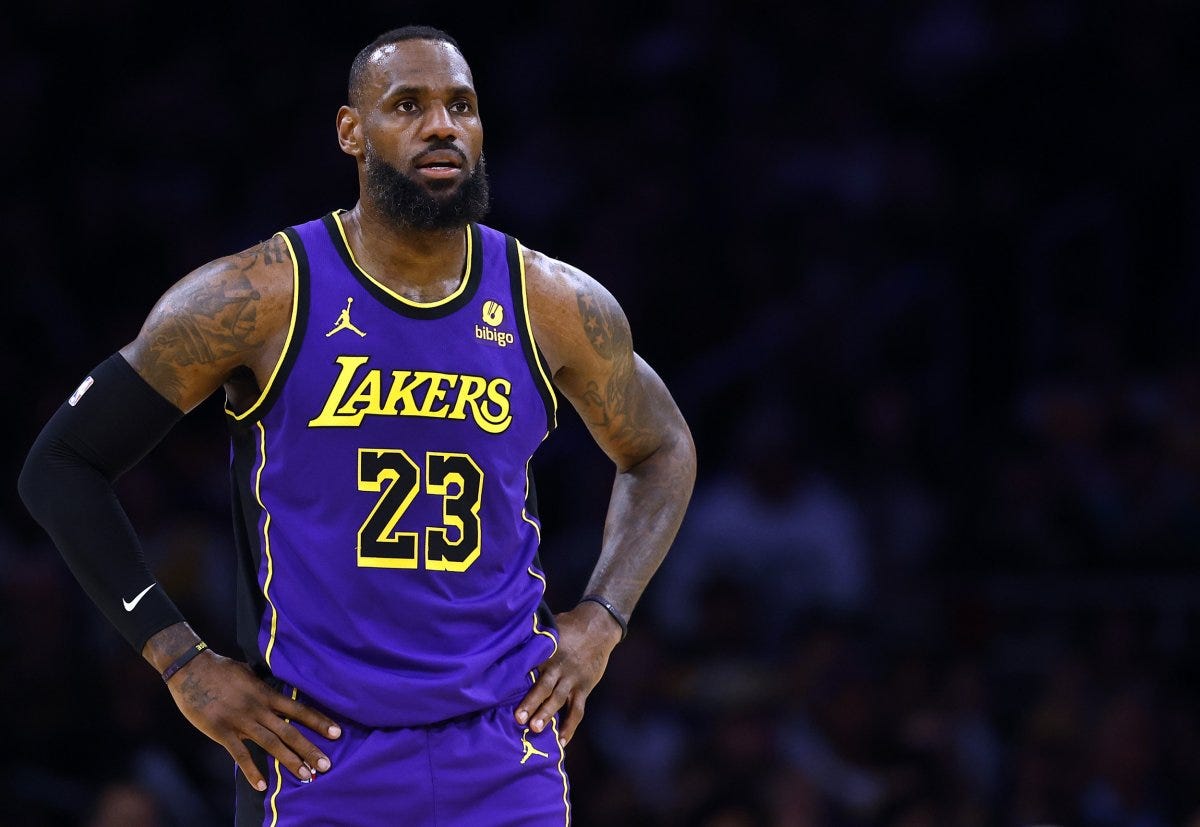
LeBron James is taking his talents to DraftKings. The Los Angeles Laker is not signing his most recent contract with an NBA team or a major retailer, but a gambling company. DraftKings announced James’ ambassadorship in early February, implementing the NBA superstar as not only a spokesperson, but an active campaigner for the gambling service. Being that James is unable to place bets on NBA games for obvious conflicts of interest, he will post his picks for the NFL on a weekly basis once football resumes later this year. When I saw this partnership come to fruition, I expected outrage from the numerous publications who, particularly in light of the recent Super Bowl, have been questioning the ethics and potentially negative impact that mainstream sports gambling has had on American society. Instead, the venture was received with little fanfare and criticism alike, only wielding notoriety because of James’ objective celebrity-status. In reality though, the newly-formed duo is a continuation of the normalization of a practice that was still outlawed less than a decade ago.
In 1992, anti-sports gambling proponents successfully lobbied Congress to pass PASPA (Professional and Amateur Sports Protection Act), which essentially stripped states of the agency to implement their own sports gambling laws. One of the leading voices for its passage was Senator, and former New York Knick and NBA Champion, Bill Bradley (D-NY); this was clearly a different time than the one that we are living in, which sees the largest figures in sports gladly taking checks from Big Sports Betting. The law stood for over two decades, but was seen as a failure. It may have stopped legal sports gambling, but it inadvertently encouraged illicit forms of it. This was something acknowledged by the then newly-christened NBA Commissioner Adam Silver in 2014, when he indirectly claimed that the industry is inevitable and that the country should embrace it in the same way lotteries are. The notion was that if people are going to do something illegal regardless of laws telling them that they cannot, we may as well regulate it to both make it safer and profit off it. PASPA was the status quo of the industry until 2017, when the U.S. Supreme Court returned the right of sports gambling regulation to the states; the 10th Amendment was cited to explain that PASPA violated states’ rights because this was an industry that was not explicitly outlined as within the jurisdiction of the federal government. Thus, the floodgates to heaven and hell for sports fanatics and gamblers around the country was opened.
It is not an exaggeration to say that the industry exploded following the 2017 ruling. Because the industry was unregulated prior to the definitive decision, there are only statistics illustrating the industry’s growth starting in its first full year of legal operation in 2018. In 2018, total sports betting revenue in the U.S. reached over $400 million. Thanks to a mixture of COVID-19 restricting people to their domiciles and the online universe, as well as an excess of disposable income post-pandemic, the industry’s revenue grew from $1.55 billion to $4.33 billion between 2020 and 2021 respectively. In 2022, that almost doubled to $7.56 billion. And guess who had the second-largest market share in the U.S. in 2022: DraftKings.
After sports betting became an acceptable pastime, it began to grow from a hobby to a full-blown occupation for some. And these gamblers skew younger: research shows that those aged 18-34 years old are tied with those in the 35-49 range for the highest proportion of sports betters that gamble “every day or almost every day” and “about once or twice a week.” Those aged 18-34 lead the share of bettors who gamble “about once or twice a month” and “less than once a month.” The highest proportion of age-group that “never” sports bets are those aged 65+, illustrating how there has become an accessibility gap in terms of the technological use of apps like DraftKings that makes it easier for those who know their way around an iPhone to place a bet. It is generally accepted that the younger one is, the more impressionable they are and this bodes well for disastrous susceptibility to celebrities they may idolize for reasons outside of gambling, pushing bets that have unequal consequences for them compared to their audience.
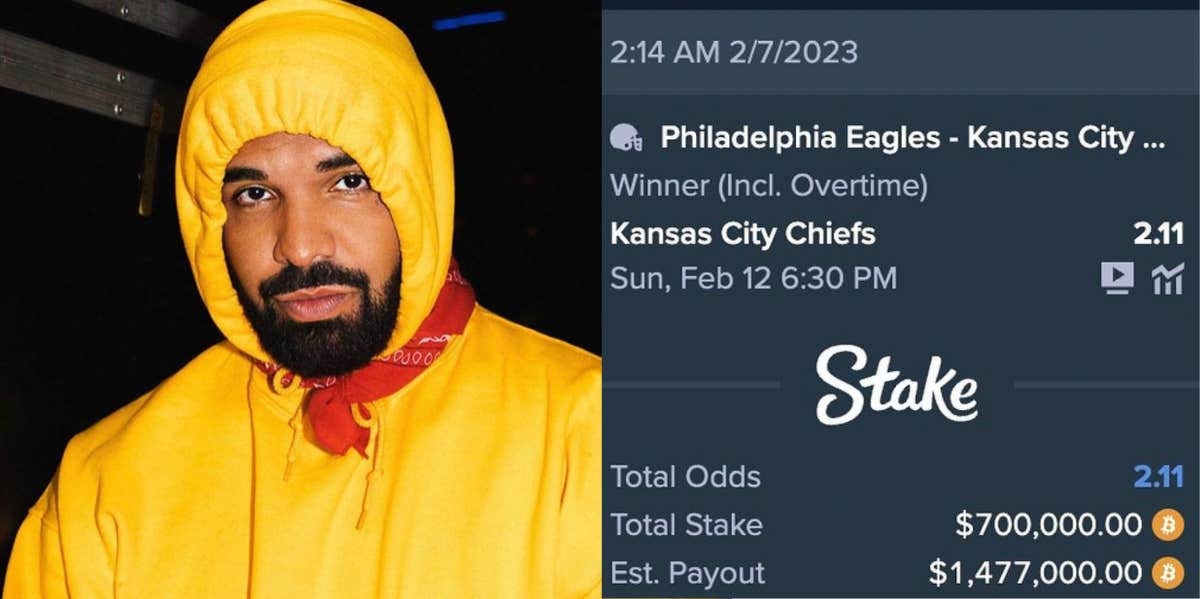
Enter Drake and every live-streamer under the sun. To understand how someone like James’ positionality could motivate impressionable youth to gamble, it is necessary to zoom out and look at how the industry as a whole has exploited their consumers that skew younger. Outside of James, Drake is probably the most popular figure in pop-culture with a direct partnership and sponsorship with a gambling corporation. Just recently, the rapper publicized his $1.15 million bet on the Kansas City Chiefs to win this year’s Super Bowl to his 145 million followers. The Chiefs won and now the world knows that he received an estimated payout of $2.3 million. This glorious windfall could have hypothetically motivated some of the 2.1 million people who liked the original post to place bets of their own. To many unfamiliar with the business happenings of Drake’s career, this may seem like an innocent attempt by Drake to connect with his likely gambling-aware fanbase, but there are ulterior motives at play that the artist chooses to covertly express. Drake is a co-owner of Stake and signed a $100 million endorsement deal with the company in 2022; he also occasionally live-streams with the sole purpose of gambling in front of his fans with the backing of Stake. This type of collusion has led some to question whether Drake is simply using monopoly money provided by Stake, but this is not something that a casual doom-scroller may comprehend without a fuller awareness of Drake’s history with the company. That being said, Drake tries to make it fairly obvious, without explicitly stating it, that he is in cahoots with Stake, as depicted by the only “highlight reel” on his Instagram page being dedicated to promoting Stake. James is following in footsteps similar to that of Drake’s with apportioned aspects of the company’s website revolving around their high-profile advertisers; Stake has a “Drake x Stake” online page, while James will have his own “Odds & Player Props” section on DraftKings. The muddy waters that make the huge monetary commitments that Drake makes opaque in their sincerity is exactly what these companies hope their audiences will see as a sincere endorsement.
The exploitation of youth consumers goes considerably deeper than focusing on the biggest fish in pop-culture, who normally have fan-bases that span generations. This does not apply to full-time live-streamers, unlike Drake who does it as a hobby, these are entertainers that commit to the endeavor as their primary occupation. Kick, a live-streaming service, was created with the intention of competing with Twitch, the front-runner in the live-streaming wars. While essentially serving the same purpose as Twitch, Kick entered the market as the bad-boy of the industry, effectively disregarding the heavy content moderation and hands-on approach that systematic entities like Twitch had finally developed after years of honing its craft. More than this though, Kick poised themselves as creator-friendly because of their 95-5 revenue split that makes Twitch’s 50-50 share pale in comparison. Kick made waves by poaching one of Twitch’s former stars, Adin Ross, after he was banned from his former streaming home. Kick has been giving exorbitant contracts to streaming talents like Ross for the past couple of years now, and it is plausible that they are capable of funding their entertainers like this due to gambling clauses in their contracts that are spurred by the company’s partnership with gambling corporations. Returning back to Stake, the company was banned from Twitch in 2023, with many citing their justification as avoiding liability for promoting gambling to their primarily underaged audience. Kick is also co-owned by Australian entrepreneur Ed Craven, who has co-ownership of Stake. This sets up another example of collusion, that again, many young audience members may not be aware of. Over 70% of Twitch viewers are under the age of 34; 41% of which are below 24 years old. And while Kick has not released the demographics of its own audience, the website sees the most traffic from the same age group under 24 years old.
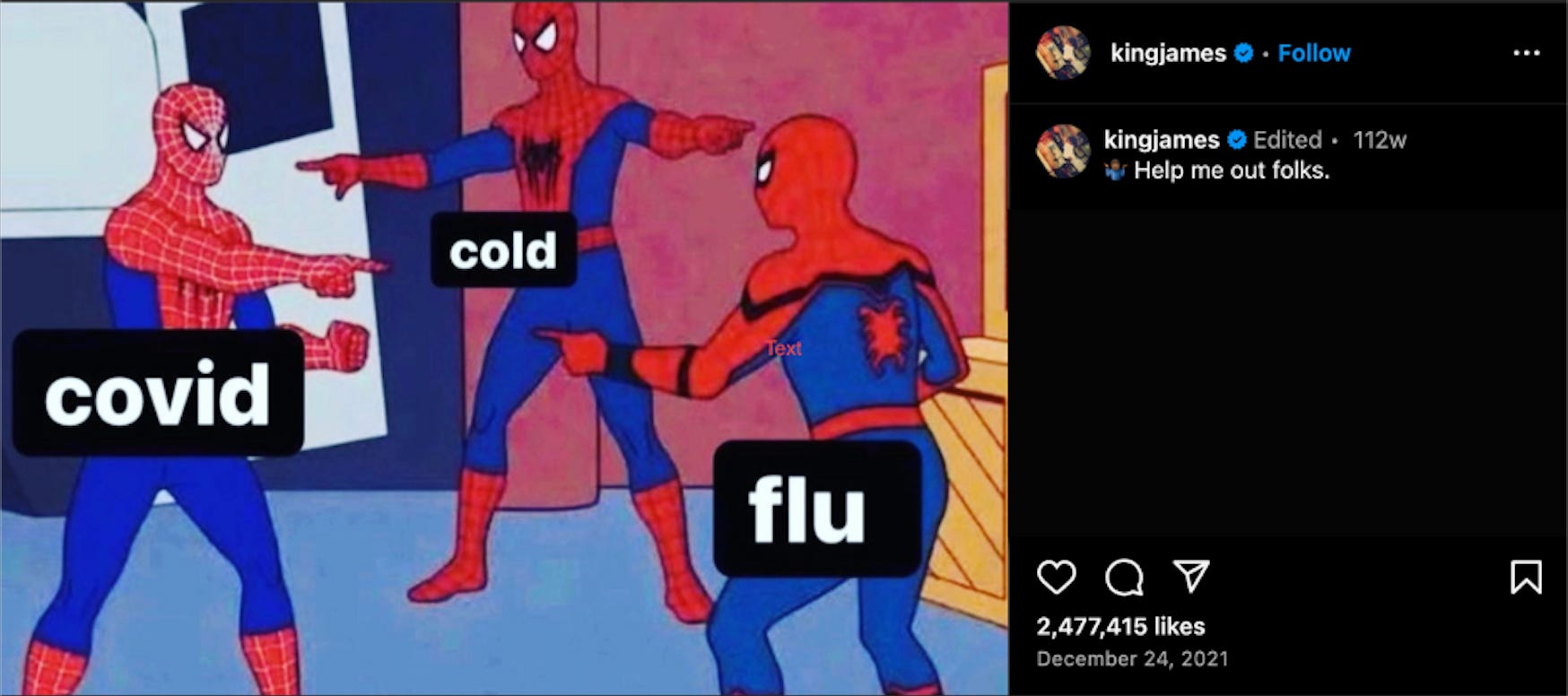
Beyond the questionable principles of promoting sports gambling as the world’s most prominent athlete, James has a historically disenchanting résumé of getting involved in matters that challenge his ethics. James is known online for his frequent embellishments and is comically mocked for self-proclaiming knowledge over fields that the public has had no experience in hearing him discuss. This took front-stage during the COVID-19 pandemic, when James mentioned his skepticism over the initial rollout and legitimacy of the virus’ vaccines at press conferences. Although James reluctantly caved into NBA guidelines that required he be vaccinated– he claimed he did it for private reasons that he did not want to vocalize –it was not before he posted a meme to his 100+ million followers on Instagram that overtly questioned the actual existence of COVID-19. Say what you want about the efficacy and necessity of the vaccines in hindsight, but James, one of the most popular humans living or dead, spreading unverifiable information at a time of global panic is not what the world needed. More than this though, James even claimed it was not his responsibility to promote the vaccine, but still chose to voice his unprofessional opinion on the matter for his majority youth fans to take in at a time where news-skepticism was running rampant. It does not matter where you stand on the vaccine, the U.S.’ government’s handling of it and everything in between, but this is undoubtedly irresponsible behavior. One of the most prominent examples of James’ disregard for the ramifications of his endorsements was in 2019, when then Houston Rockets general manager Daryl Morey voiced his support for the sovereignty of Hong Kong within China. China is the NBA’s largest market outside of the United States, and so whether or not it was for this reason, the league brass denounced him. James, as he has the right to, chimed in as well. James decided to condemn Morey as misinformed and uneducated about the complex geopolitical issue, right after prefacing this bold statement by implicitly admitting his own lack of understanding on the issue, saying that this is a conflict that players should not feel obligated to take a stance on.
The issue with James’ DraftKings sponsorship is a combination of the unwieldy nature of the sports gambling industry that seems like a recipe for disaster when considering James’ crisis-management skills. James has a tendency to make brash statements in stride, assuming that his opinionated endorsements will not be taken at face-value. This is a fair perspective when you are a regular citizen, but whether he likes it or not, his words linger because of the incessantly public-facing nature of his career path. James needs to be careful with who and what he legitimizes for the sake of the youth and general public.