NBA Offenses Continue to Develop and Dominate
The current state of how offense is played in the NBA is unprecedented.
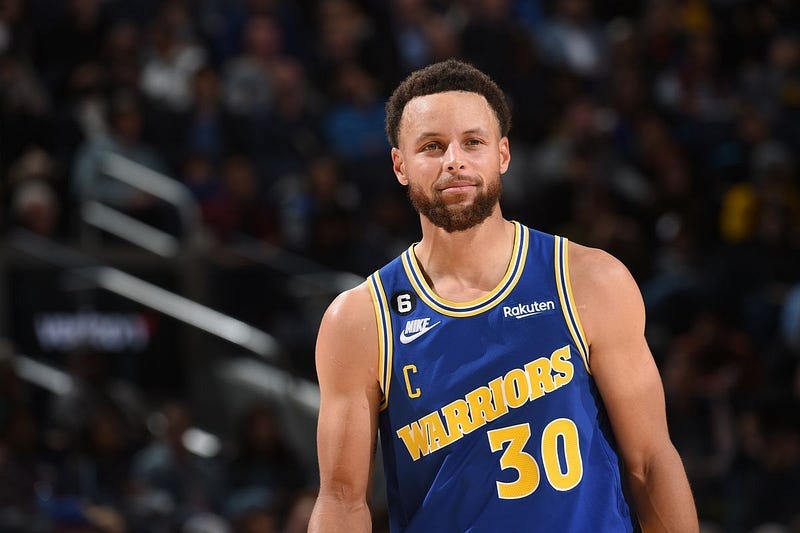
When Carmelo Anthony clinched the scoring title for the NBA’s 2012–2013 campaign with 28.7 PPG, I was impressed. It seemed like an unparalleled achievement considering that it was 9.3 points higher than the last member of that year’s top 10 list, Brook Lopez at 19.4 PPG. Others within this ranking included familiar faces that are known for their offensive output, such as Stephen Curry, James Harden and runner-up Kevin Durant. Fast-forward to this current 2022–2023 season and Anthony would rank 9th. Besides Anthony, only Kobe Bryant and Durant would have scratched this year’s upper-echelon scorers by inches.
There is much debate on why the league has teetered into the direction of gun-slingers that score at will and defenders who only get back to expedite their return to offense. You could point to rule changes like the enforcement to prevent transition take-fouls that inhibit fast-break attempts; or some older basketball enthusiasts may continue to project their disdain of the perimeter-heavy offenses that have been popularized by the likes of Curry and his Golden State Warriors. What is undeniable is that offense has surged exponentially since the days of successful defense-oriented squads like the 2004 Detroit Pistons or the methodical execution of Gregg Popovich’s multi-Championship winning San Antonio Spurs.
When you travel back in time to the aforementioned 2004 season, the following league-average statistics appear: about 90 possessions per 48 minutes (Pace), 14.9 attempted three-pointers per game (3PA), a turnover percentage (TOV%) of 14.2%, an effective field-goal percentage (eFG%) of 47.1%, 102.9 points per 100 possessions (ORtg) and about .23 free-throws for every field-goal attempt. Now, let’s take a look at last season’s numbers: a pace of 98.2, 35.2 3PA, a TOV% of 12.3%, an eFG% of 53.2%, a 112 ORtg and .19 free-throws for every field-goal attempt. The league is faster, more efficient and less prone to errors than it was almost two decades ago.
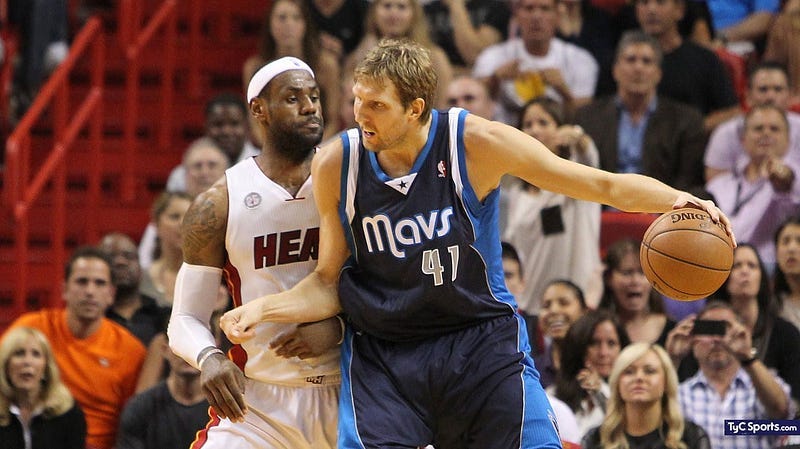
There is a domino-effect at hand that infiltrates the reasoning behind every statistic. Whether you blame or praise Curry, he definitely innovated this altered landscape where perimeter off-ball movement could develop higher percentage shots than driving or handing the rock to big-men like Dirk Nowitzki or Shaquille O’Neal that could back their matchup down and take on an independent scoring responsibility. The stark increase in three-point attempts directly impacts shooting foul occurrences, TOV% and pace. Driving to the paint or getting close to the rim invites contact from lumbering giants that lack the nimbleness of forwards and guards who can follow the ball. Slashers like Dwyane Wade and Monta Ellis feasted on vulnerable centers like Roy Hibbert and Dwight Howard who inevitably could not control their size in the wake of a shifty target directly attacking them. When players like Trae Young and Curry are able to dance around the perimeter, it allows them to speed up the game by avoiding fouls or finding openings early in the shot-clock. As shots are launched quicker, it debilitates the defense from forcing turnovers that would normally occur through ill-advised dimes within the lower block.
Even though fouls in the paint may be harder to come by nowadays, players like Devin Booker and Chris Paul have simply adopted new tactics to draw fouls, such as the rip-through that forcefully hooks their defenders into a shooting foul against their will. These phenomenal attempts to manipulate referees have even gone so far as to Paul drawing a rip-through foul before he even planted the ball on the ground after catching an in-bound pass.
Regardless of how the game has become more dynamic and offensively fluid, it does not mean that the bigger guys can’t adapt to it; a claim that has been repeatedly validated by two-time MVPs Giannis Antetokounmpo and Nikola Jokić.
https://www.youtube.com/watch?v=RmYOCRFF8BY
The clip above is from Antetokounmpo’s double-nickel outing versus the Washington Wizards recently. Amazingly, Giannis’ first field-goal of the 55-point night happens after 5 minutes have already passed, but even more astonishingly is the fact that it comes from his ability to still implement the bully-ball of the early 2000s by posting up against the similarly-sized Kristaps Porzingis near the three-point line, just to propel his body down the baseline on the way to a dunk that makes the 7-foot Wizards’ giant look like a toddler.
Jokić may be even more of an anomaly. In the clip above, the Denver Nuggets center is guarded by the Cleveland Cavaliers’ Jarrett Allen, another defender of similar physical stature to the point of offensive focus. Jokić’s diverse skill set consists of the NBA’s modern perimeter offense, an incomparable playmaking foresight and his objective size that enables him to play as a traditional post-merchant if needed. Here, Jokic brings the shot-blocking Allen out near the charity stripe which leaves the paint virtually unoccupied by the tardy Evan Mobley, another defensive connoisseur who likely assumed Jokić was going to take Allen on in isolation. Instead, Kentavious Caldwell-Pope makes a simple cut to the basket and Jokić makes the appropriate pass to set up a goal-tended layup.
Moments like these make it easy to claim opposing defenses should simply be more accountable for who they face on offense, but that also diminishes the unpredictable nature of the current amorphous NBA. Labels like point-guard and center are now convenient novelties that allow fans and observers to box certain players into roles that they far exceed; basketball is more situational than these presumptive titles and will likely remain this way until there is another stylistic pioneer that is able to disrupt this current level of offensive-dependence that is indubitably apparent.