Top 10 Small Forwards Heading Into 2022–2023 NBA Season
Honorable Mentions: Andrew Wiggins, OG Anunoby and Keldon Johnson
10. Mikal Bridges
The current poster-boy of the 3-and-D archetype, Mikal Bridges deserved at least his runner-up status for the Defensive Player of the Year award. Bridges is almost always assigned to the opposition’s best player, but never seems to give up frivolous fouls, as emphasized by his absurdly low 0.5 personal fouls per 75 possessions. Even though Bridges is not very proficient with the ball in his hands, he’s just as careful with his shot selection as he is with his defense, evidently showcased by his almost 79% field goal percentage when he is near the rim. Bridges’ base scoring production will probably hold him back in these kinds of rankings for years to come, but his play on the other side of the ball is what gets him this spot.
9. Khris Middleton
Khris Middleton is an absolute hooper and continuously shines on the grand stage, mostly against my Miami Heat in the playoffs, but it’s still true. Middleton’s interior and perimeter defense are actually quite lackluster, but his 1.2 steals per game last season will suffice. Middleton’s game is fearless in his tendency to pull-up for jumpers fully contested, which provides reasoning for his 98th percentile rate of being fouled on 5.3% of his three-pointers. If you want a player to chase shots in the closing minutes of a tight game, look no further than Middleton.
8. Brandon Ingram
Similar to Khris Middleton, Brandon Ingram is liable to stop on a dime at any moment. Subsequently, his offensive gravity is intense, enabling almost 9 open shots per 100 possessions for his teammates just off of his bold shooting. Ingram’s acclaim has taken a cliff-dive from where it once was during his Most Improved Player campaign, but his base stats have stayed generally the same. His offensive contributions to the New Orleans Pelicans have not wavered much even with the inclusion of a healthy Zion Williamson. Even in the 2020–2021 season, the Pelicans’ ORtg would decrease from 116.7 to 110.2 when he was benched. It’ll be scary to see a fully equipped New Orleans Pelicans.
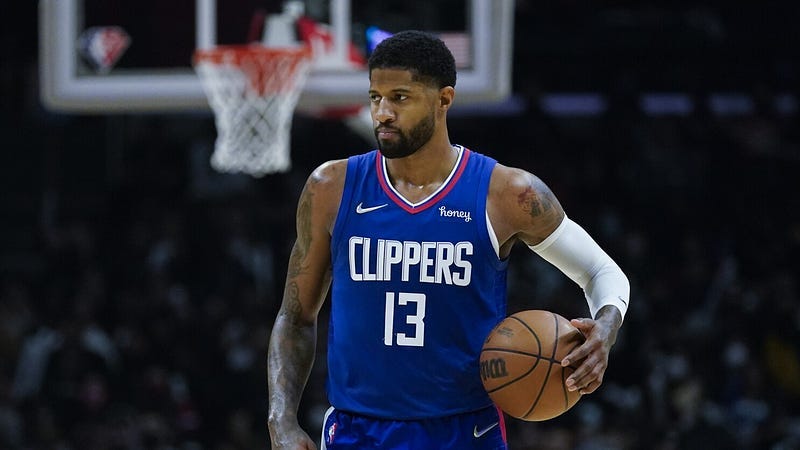
7. Paul George
Paul George experienced a similar situation to Damian Lillard, a rough start followed by an indefinite injury. George’s rocky 2021–2022 season saw his ORtg plummet from 113 to 100, as well as his field goal percentage decreased from 46.7% to 42.1%. Nonetheless, George’s DRtg actually improved by 4 points, reinforcing his elite defensive reputation. On average, George’s matchups shot 6.53% less than their average when he was assigned to them last season. George’s presence was also felt on a grander scale, with opposing teams’ ORtg decreasing by an average of about 7.2 points when he was on the floor. While George was formally the 3-and-D king, we’ll see if the “3” part returns this upcoming season.
6. Demar DeRozan
Not many could have foreseen the rebirth of Demar DeRozan. When DeRozan signed a 3-year deal with the Chicago Bulls, many saw it as DeRozan deliberately choosing to take the backseat to Zach LaVine, but the opposite occurred. DeRozan went from averaging 21.6 PPG as the leader of the San Antonio Spurs to scoring a career-high 27.9 PPG this year with the Bulls. Shooting a career-high from three, as well as second to his career-best from the entire field, DeRozan’s offensive production surely directly contributed to many Bulls’ wins. This is emphasized by the fact that DeRozan shot 53% from the field during victories, but an average 45.9% in losses. DeRozan is simply the Bulls’ main benefactor.
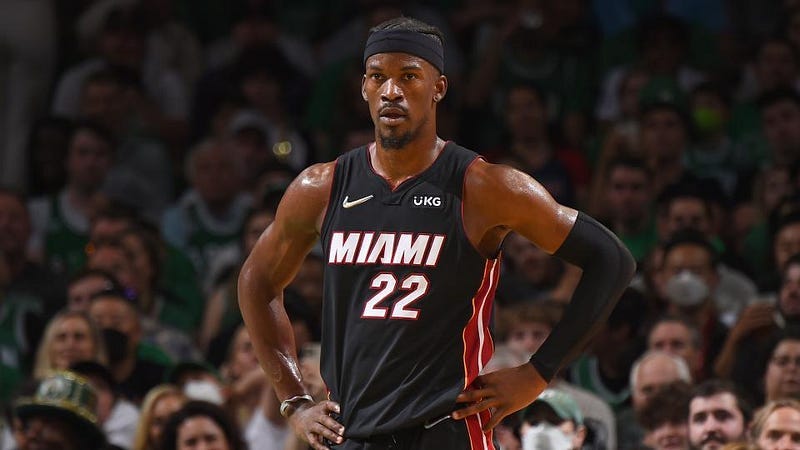
5. Jimmy Butler
I typically try to stray away from individual playoff performances when evaluating a player’s future worth, but Jimmy Buckets will be an exception. Butler is entirely the reason for the Miami Heat even scrapping a chance at the Championship during the 2022 playoffs, as evident by an almost 9-point ORtg increase for the Heat when he was on the floor in the playoffs. This coincided with his gritty defense that decreased playoff opponents’ ORtg by 3.5 points when he was on the court. Aside from his postseason showcases, Butler was omnipotent on defense during the regular season with his invasion of passing lanes and his ability to avoid screens. Butler also crashed the boards with an adjusted offensive rebound success rate of 49%, good enough for the 85th percentile of all players. His offense lags behind his shot-stopping, but there are not many players who are more valuable to their team than Jimmy Butler.
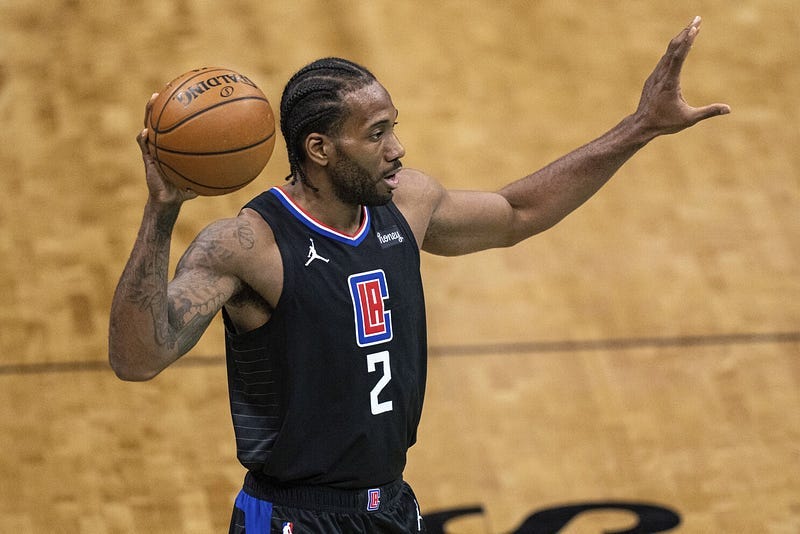
4. Kawhi Leonard
It is certainly polarizing to put Kawhi Leonard at this spot with an omitted 2021–2022 season due to his destroyed ACL, but his history of resilient recoveries are telling enough for me. Kawhi Leonard’s offensive impact is similarly elite to his defense, as his 2020–2021 ORtg was an outstanding career-high of 126 in the same season that he fell into the 95th percentile for steals per 75 possessions. When we last saw Kawhi in the 2021 Playoffs, he dropped two 40-pieces and multiple 30-point games, so if he can pick up even close to where he left off, it’ll surely be some enticing basketball.
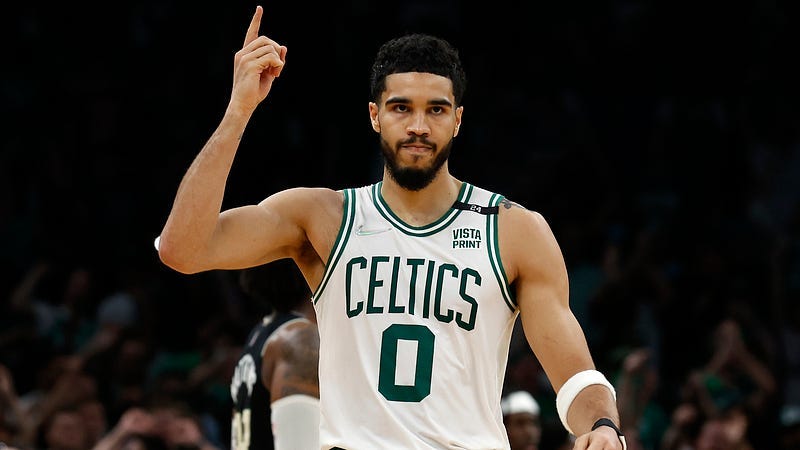
3. Jayson Tatum
A career-high 26.9 PPG, 8 RPG, and 4.8 VORP for the 2021–2022 season, Tatum’s progression doesn’t seem to be slowing down. Although Tatum has the tendency to, for lack of better words, ball-hog with his driving kick-out rate of only 32.1%, but even with a decrease in field-goal percentage, his 2-pointer split was still at a career-high 52.4%. Tatum was also a force in the paint with his defensive rebounding average that places him in the 97th percentile. Tatum is also rarely assisted during offensive possessions, meaning that his shot-creation is proficient enough to suffice without a true playmaking point-guard. Whether or not Marcus Smart and/or Malcolm Brogdon will start is still up in the air, but Tatum has proven he works alongside Smart, but his arsenal may expand with a great passer like Brogdon.
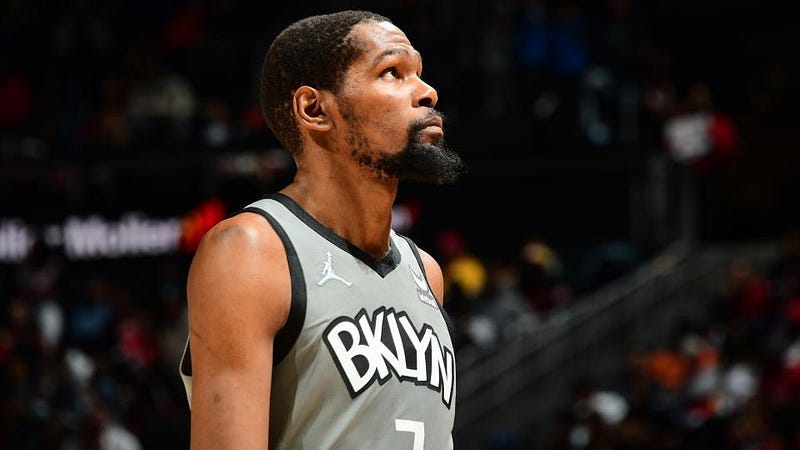
2. Kevin Durant
Kevin Durant averaged his most PPG last season since his MVP year. Durant systematically produces at a similar rate each year, rarely disappointing. He is still a sniper at pull-up three-pointers, which he shoots at a rate of 40.3%, and he improved the Nets’ ORtg by a substantial 6.7 points when he was on the court last year. Durant’s basic stats don’t illustrate the full impact of his defensive scope, as his lanky frame holds the opposition to a -6% decrease in field-goal percentage for interior attacks. Even though Durant didn’t qualify for the MPG (minutes per game) leaderboards because of his small sample size of games, he would tie for third-place if inserted into the official list with his massive 37.2 MPG. Durant may forever be labeled a “snake” by even Nets fans, but he’s more of a work-horse to me.
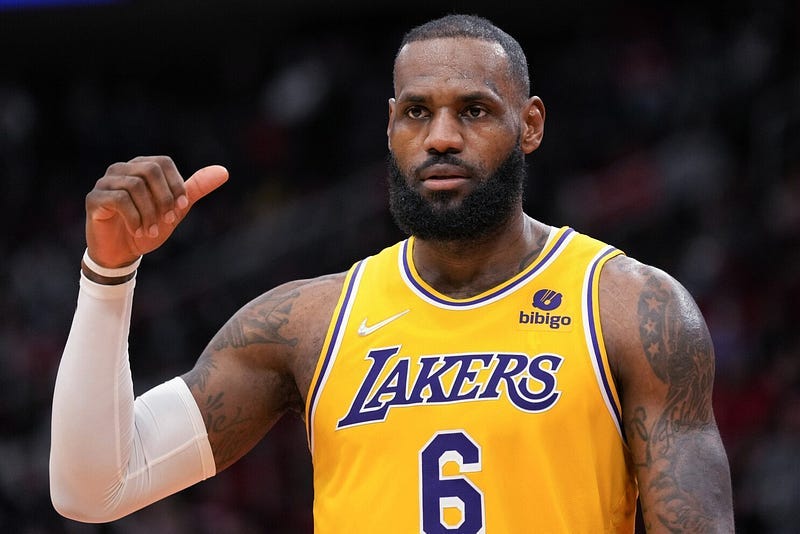
1. LeBron James
LeBron James may have had the best statistical season of his career at 37 years old. LeBron averaged a career-best 30.3 PPG. Considering that James can be generalized as a stretch-forward, his 52.4 field goal percentage is certainly impressive. Everybody knows what LeBron can do, so his scoring gravity is absolutely oppressive, enabling him to set up about 11.5 shots per 100 possessions, strictly off of drawing attention. LeBron is also known for his dramatic chase-down blocks, but he is even better when he’s in front of the ball, as exemplified by his 22% block tendency on all of the interior shots he contests. Ranking 4th in the league for VORP with only 56 games taken into account, LeBron’s individual impact is unparalleled and unprecedented, certifying him as the best small-forward in the NBA.