The “RFK Jr. is literally me” phenomenon
RFK Jr.'s populist appeal is not new in politics, but certainly is adapting to the times.
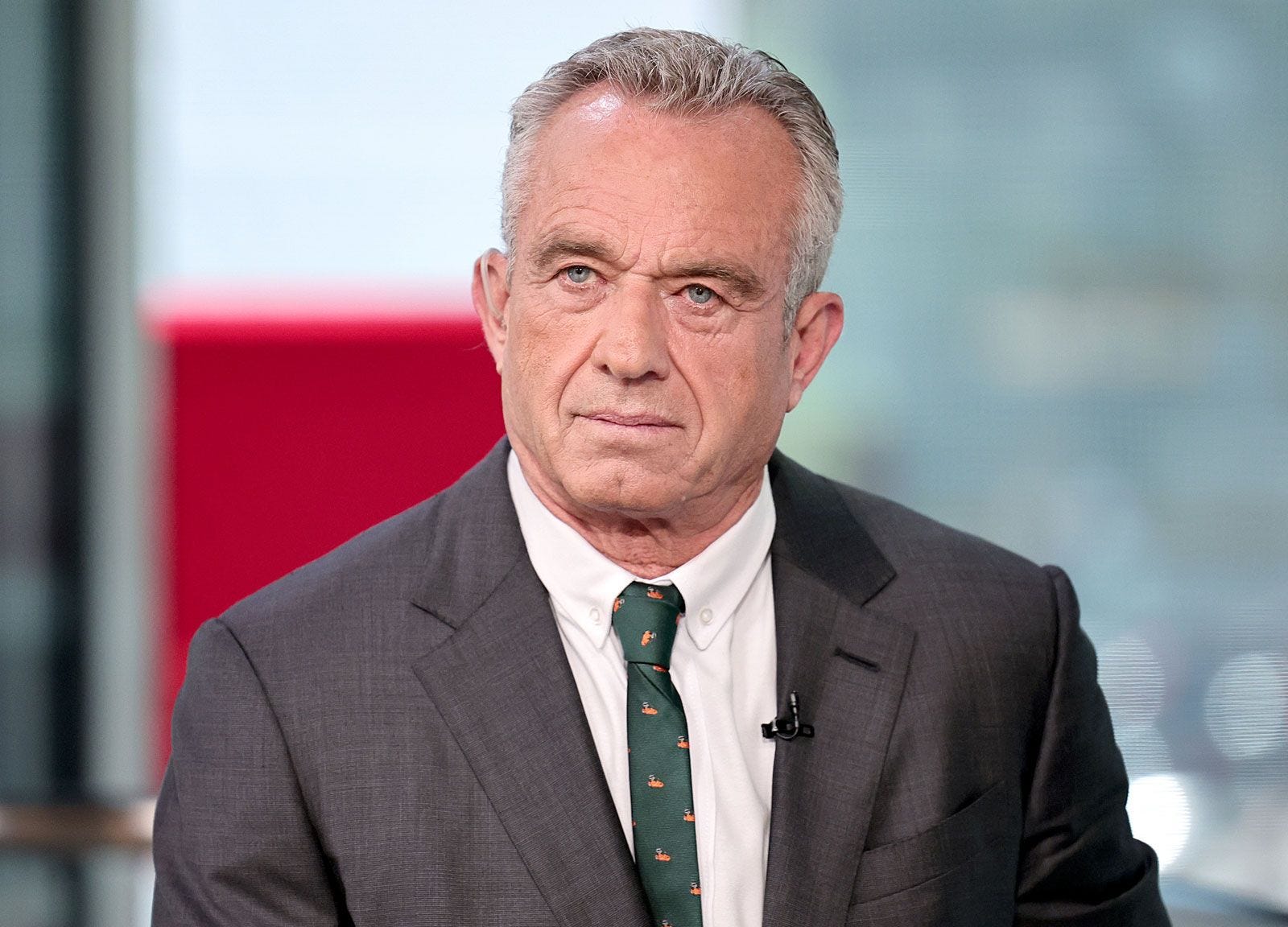
Do you trust the government? Do you trust President Joe Biden? Are you happy with an all-but-certain rematch between Biden and former President Donald Trump? If you answered no to any of those questions, you may be eligible to become a Robert F. Kennedy Jr. voter.
While the results of hypothetical three-way matchups between RFK Jr., Trump and Biden can drastically vary, there is clearly enough curiosity to entertain these discussions in the first place. RFK Jr. has stayed relevant in this election cycle because of what he is not, rather than for what he is. He is not a lifetime politician like Biden; he is not running as a pseudo-incumbent like Trump; he is not even a party to a party! And that gets at the crux of his appeal. RFK Jr. is different in a time of political déjà vu, where the two leading candidates have been in the presidential conversation for years– Biden for 16 and Trump for 9. Moreover, he is a more palatable 70 years old to Trump and Biden octogenarian statuses.
RFK Jr. is also quite politically dissimilar to Trump and Biden. He is a product of a new breed of politics, one that fits into a bermuda triangle of conservative-coded individualism. This is someone who is likely a casual consumer of news, whose bulk intake of political information is from informal, but assertive, analysts of current events à la Joe Rogan, Dave Portnoy and Reddit. It makes sense why many are attracted to this style of media engagement because normally mundane topics like green initiatives and vaccines sound a lot more entertaining when they come from your favorite podcaster or celebrity personality. These types of mediums also implicitly discourage fact-checking because the nature of a podcast or talk-show is supposed to be candid, so information is presented in a manner that assumes the audience will not take their word for it. This vulnerability is exactly what RFK Jr. has exploited in an increasingly impressionable era of social media where the way information is fed to audiences is more malleable than ever.
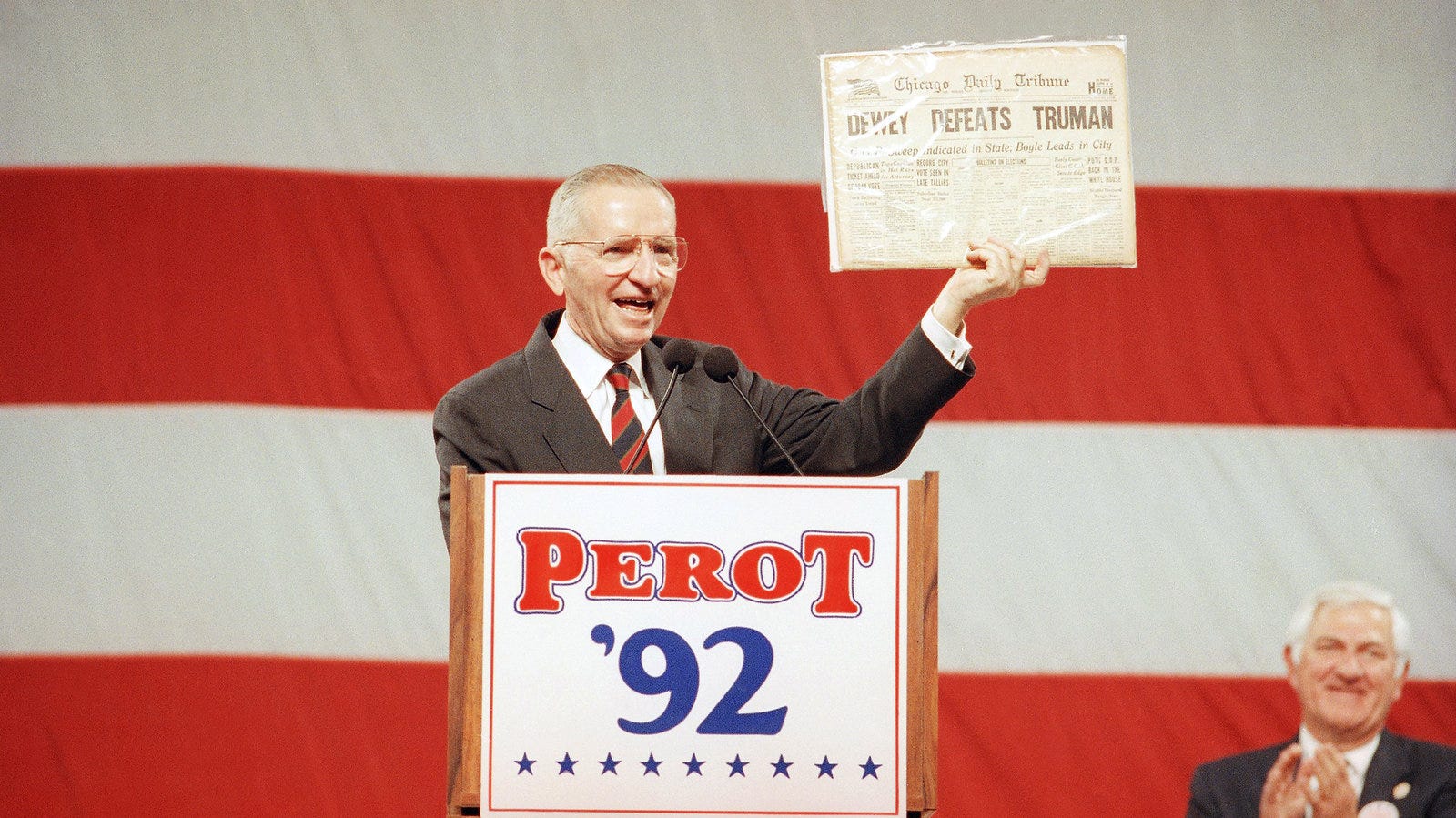
RFK Jr. is not a historically outlying candidate though. He is part of a tradition of personable populists who champion the notion of voting as a counter-cultural referendum on the two-party system and American politics as a whole. We can look back at the appeal of third-party extraordinaire Ross Perot to understand where this type of left-field candidate can manage to build grassroots traction. This is regardless of the fact that neither have any real grassroots identity; RFK Jr. is an heir to arguably the most powerful family in American political history; Perot was at one time the richest man in America. But their lack of stake in the political system that their individual prosperity entails is exactly what sets them apart. Neither have ever held political office, and so it is easy for them to be able to place blame on those in Washington D.C. and portray themselves as victims of the maladies of the swamp, similar to that of all American voters.
Both Perot and RFK Jr. are mad at the system, and if voters really want to change things, it is their duty to vote for either candidate out of a symbolic defiance to the complacency of the two-party system. RFK Jr. recently claimed that Trump and Biden are forcing Americans to vote “out of fear” for disrupting the political system, as opposed to maintaining “your values” and instead supporting him. What a convenient argument.
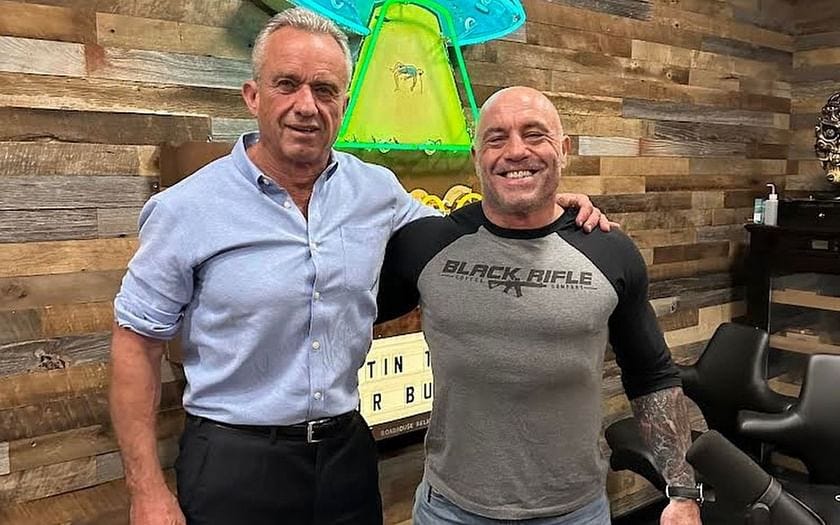
Perot set the groundwork for a contemporary populist approach to building a political name-brand that RFK Jr. has built off of with the aforementioned podcast-forum demographic that the latter candidate appeals to. In 1992, Perot went on Larry King Live and basically used reverse psychology to urge his fans to propel him into the boring presidential race between incumbent George H.W. Bush and Arkansas Governor Bill Clinton. Similarly, RFK Jr. has hopped from podcast to podcast to test the temperature of his radical opinions– he thinks vaccines cause autism –realizing that the medium’s greatest superpower is that its audience is readymade for him, as it is full of disaffected young voters who are waiting to be mobilized by an invigorating force. This is not an assumption of mine, but quite literally a key component of RFK Jr.’s campaign strategy. Additionally, and unlike Perot who relied on legacy media programs for his marketing masterclass, podcasts, YouTube, etc., are inherently counter-culture because of their baked-in self-regulated ethos, furthering RFK Jr.’s stance that he is a “dissident and insurgent… [that aims] to end-run the corporate media monolith.”
RFK Jr. also makes it easy for his supporters to defend him from detractors across the political spectrum because his views constantly change and contradict themselves. His base can essentially mold a rebuttal for him as they see fit.
-
He supported a 15-week federal abortion ban and then backtracked and claimed he was confused by the question (it was extremely straightforward);
-
He does not support Ukraine in their war with Russia, putting him at odds with countless factions across the ideological universe; and
-
He disagrees with building a wall along the southern border to quell illegal immigration, but supports more higher-tech deterrents and methods of catching perpetrators.
The question then becomes whether RFK Jr. can truly be a spoiler, and if so, which two-party candidate would he hurt more? There is no definitive answer for either inquiry, but many have started pointing to Trump as an answer for the latter. Trump initially proclaimed RFK Jr. as the “most Radical Left Candidate” in the 2024 election (over Cornel West or Jill Stein??), claiming that he would also vote for him over Biden if he had to. Trump thought he was cleverly helping propel a threat to Biden into the mainstream, but this has seemed to boomerang for the Florida man. Trump has now resorted to pejoratively referring to RFK Jr. as “Junior” and saying that he would be a “WASTED PROTEST VOTE” (capitalization not mine).
What is worse for Trump is that from an ideological standpoint, RFK Jr.’s anti-bureaucracy, arguably Libertarian perspective is presumably an easier jump to make for COVID-skeptic MAGAlytes who largely reject federal governmental encroachment on individual liberties.
RFK Jr.’s most notable political stances and conspiracy theories, such as the vaccine one, are conservative in nature. So some would assume that RFK Jr.’s more centrist/left-leaning Independent voters would be deterred by their wackiness, but that theory seems to be flawed because his base remain steadfast in their support regardless of learning about his inconsistent and fringe views.
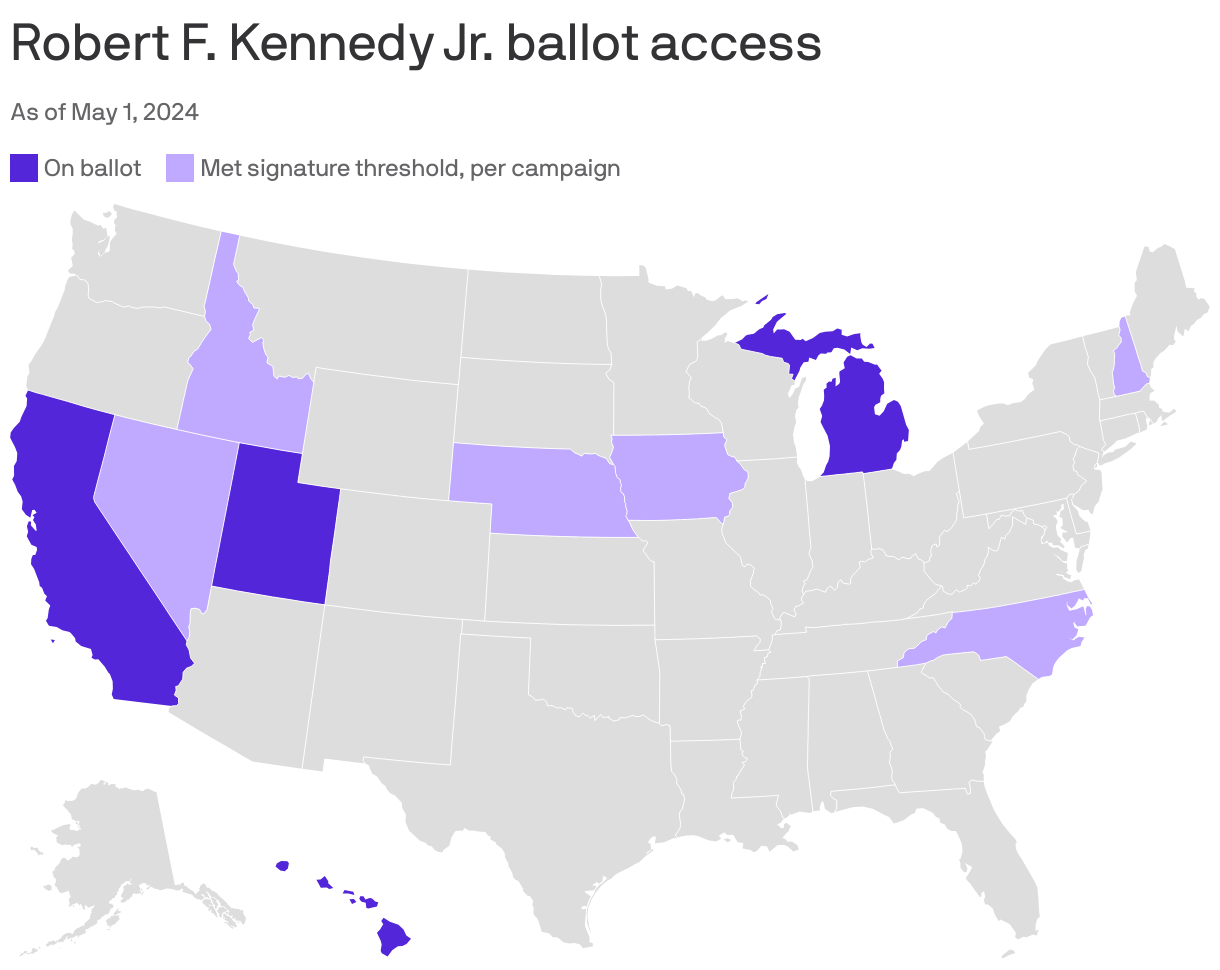
In terms of numbers for how RFK Jr. shapes up to spoil the election though, the highest vote-share that I have seen him poll recently in a three-way race is 14%, where removing him from the ballot gives Biden a 6% bump and Trump a 9% one, so the evidence is certainly not conclusive. RFK Jr.’s party-crashing ability is also bolstered by his team’s concentrated focus on becoming ballot-eligible in the most volatile swing-states. This includes Michigan, North Carolina and Nevada. And he is on a few red and blue strongholds’ ballots alike (i.e. California, Nebraska). What RFK Jr.’s potential impact on the 2024 election comes down to is if he can truly become politically salient, an attribute that all successful populists, including Trump, have come to master through their narrative puppeteering of media networks. RFK Jr.’s audience of podcast listeners makes up just a fraction of the reach that network television could help add to. That being said, he is starting to make the rounds on cable television stalwarts like CNBC and CNN, as well as right-wing proponents like FOX News and Newsmax, much to Trump’s chagrin.
13% of voters have never heard of RFK Jr., while 30% have no opinion on him. That 30% is who RFK Jr. needs to inform, even if it is with misinformation, in order to complete his dream of screwing with this year’s already messy election.