The Thing (1982) film review & summary
A virtuoso directorial performance in suspense and suspicion.
SOFT 9/10
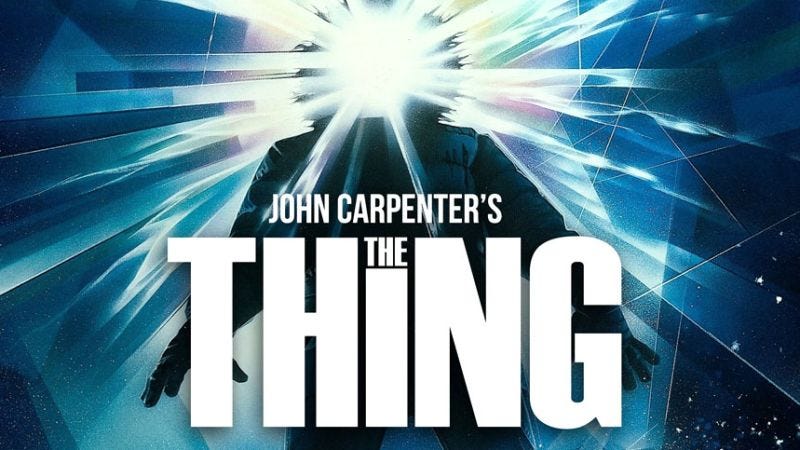
While The Thing may pull many in with its gore and jarring visuals that are apparent, the intangible aspects of this film are what make it so compelling four decades after its release. Director John Carpenter carved a niche out for himself in the thriller and horror genres by instilling an interactivity into his films. His most popular film, Halloween (1978), is more so about how suspense and the fear of the unknown can toy with onlookers and the film characters themselves than the sequences of violent action. The Thing (1982) is an extension of this with a stricter focus on human nature and its volatile condition that depends on the variables that surround mankind.
The Thing plops the audience directly into a context that reveals critical features about the film’s extraterrestrial antagonist(s) without giving it away too soon. Everything about this film relies on the subjectivity of assumption; who are these sadists shooting at an innocent dog as it tries to find its way back home? Just as with many other features of the film, the altruism of wanting to protect the animal should not have been informed by a benefit of doubt. Looks can be deceiving and in the case of the alien species that has found its way to this Antarctic environment, this notion is taken a step further.
The “thing” is able to shape-shift, turning into doppelgängers of real animals and people with the goal of isolating them in a 1-on-1 environment to further usurp more creatures and increase their power. The American crew realizes this when the aforementioned dog reveals its true form. This understandably shakes up the American crew. If a dog is man’s best friend, but the pet itself is not even trustworthy, how can these teammates feel confident in trusting each other?
The film has minimal dialogue and no score and these are essential components to its tonality. The emphasis on The Thing’s visuals helps create the unspoken tension that the crew-mates cannot overtly express because they cannot trust anybody but themselves. Anybody could be the impostor and even a buddy-system is not foolproof because of the chance that one man could be outnumbered by shapeshifting versions of two or more of their peers.
Much of the film is spent studying the philosophy of emotional rationale versus scientific probability. A character like R.J. MacReady (Kurt Russell) continuously attempts to build a logical hierarchy based on existing information on how to decipher the foes from the friends. MacReady sees more value in weeding out suspects through systematic efforts that can minimize losses. In contrast, an academically trained mind like Dr. Blair (Wilford Brimley) finds this fruitless, as there are better chances that anybody in the group is infected than is not. This leads to a series of misunderstandings, skepticism and antagonism that is so palpably conveyed through the quiet of the film’s frigid and fatalistic isolation that the audience cannot confidently make conclusions without watching the entirety of the film. MacReady is not the most reliable narrator at times, but his authoritative command of leadership leaves little doubt in his peers’ faith in his legitimate standing.
Many see The Thing as a companion to Alien (1979), but this is too simple of a comparison. The creature in Alien is more of an archetypal villain that pronounces itself frequently. The ultimate villain(s) in The Thing is human nature’s survival instinct in a circumstance of isolation. The team is not only physically alone in this frozen tundra, but emotionally deserted once the “thing” is introduced into the fray. This film could have been terrifying in any context, replace the monster with a spy, exchange it with a murderer, it does not matter. The plausibility of this film in variable circumstances is ultimately what makes it so gripping.