Tyler, the Creator’s respectable attempt at style over substance
The California artist doesn't shoot for the moon with his latest album, but he's the first to say that this attempt was purposefully grounded.
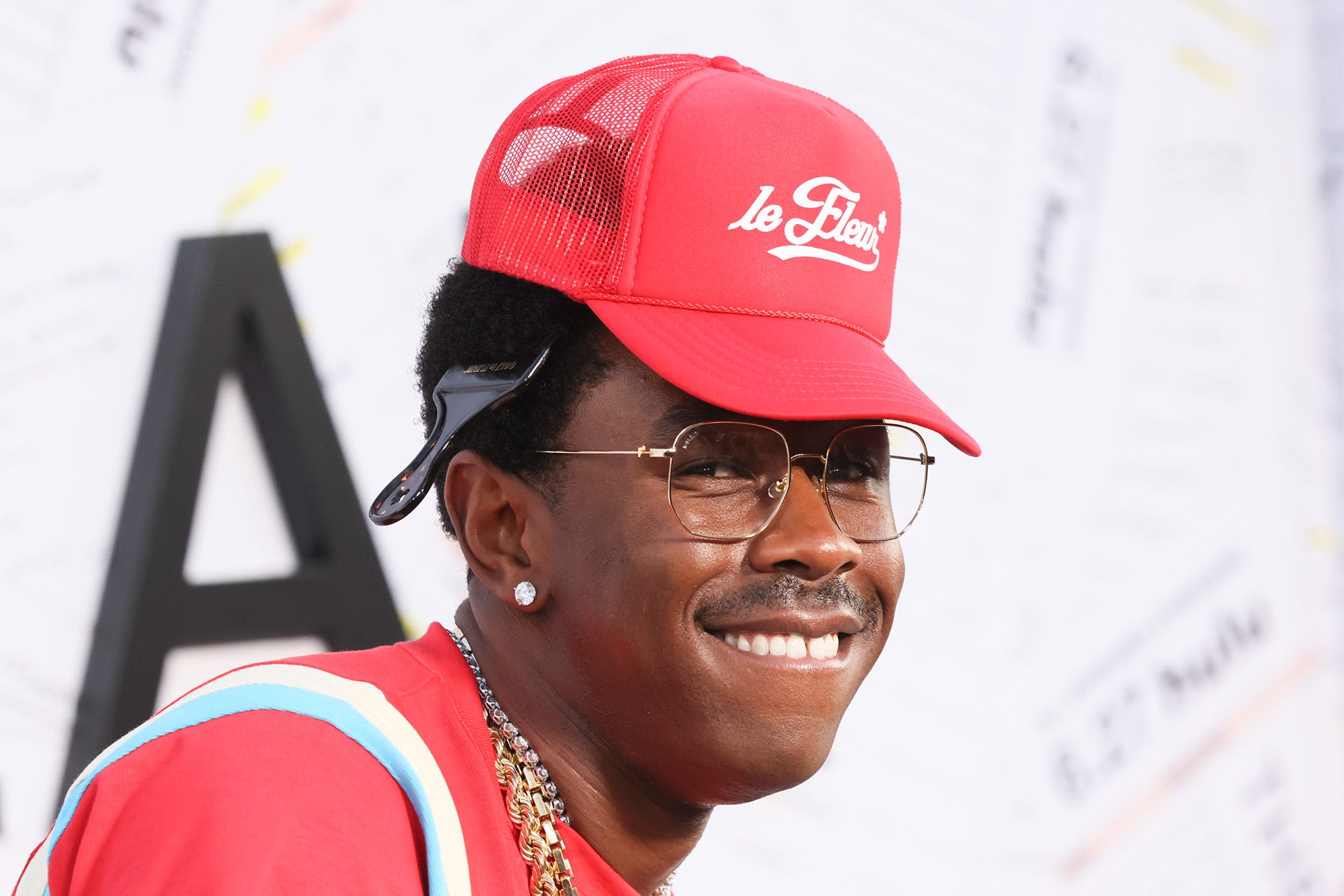
In anticipation for Tyler, the Creator’s latest effort, DON’T TAP THE GLASS, he had to explicitly warn his fans not to expect a concept album. Considering that every single listing on Tyler’s discography fits this description, foreshadowing surface-level fun could ironically be considered more experimental of a musical attempt for the California artist than usual. It has always seemed like Tyler saved his fun for outside of the studio. Irrespective of the excessively grimy and polarizing content of his early efforts like Bastard (2009) and Goblin (2011), Tyler would often prance on the stage like “Yonkers” was meant to be played in stadium speakers as opposed to a small amphitheater. Beyond music, Tyler’s work for the TV network Adult Swim as a member of the Loiter Squad was pure absurdity that displayed a blatant disconnect from his music, but maybe more of an insight into his true persona as he grew up and got more comfortable in the limelight. Nowadays, you can catch the California rapper who once wrote about violent sexual escapades and schizophrenia (from a disturbingly first-person point-of-view) hanging out with the likes of Kendrick Lamar and LeBron James. Tyler has always been a master of his own domain, which has been the studio and its association with his freedom to talk about what he wants when he wants and how he wants. But it has become clear that as Tyler’s fame and success has provided him with the luxuries of life that he has always desired, there is an impetus to share his own exuberance with his fans.
Enter DON’T TAP THE GLASS, an album that begins with directives to dance, “leave baggage at home” and to respect peoples’ boundaries, and subsequently follows its own rules to varying degrees of effectiveness. Like a one-shot sequence to open a film, “Big Poe” emphatically sets the album’s context in gripping fashion. Tyler dishes out lyrics that almost sound stripped from one of his mock freestyles regarding their exaggeratively comical tone and simultaneously aggressive sexuality and boastfulness. Pharrell uses “Big Poe” to continue his hot streak by succeeding his excellence on Clipse’s Let God Sort Em Out (2025) with what is likely his best couplet of verses in the 2020s. Oozing the idiosyncratic arrogance that made his verse on “KEEP DA O’S” shine on Tyler’s Cherry Bomb (2015), Pharrell brags that the jewelry he wears is more expensive than the cars we drive and that he likes chino pants and polo shirts—probably from Louis Vuitton.
Speaking of Pharrell, if you’ve ever watched one of Nardwuar’s interviews with Tyler, you’d be quick to gather that he’s a hip-hop historian with a specific preference for the 2000s era of producer-led consortiums. On “Sugar On My Tongue,” a weirdly hypnotizing ode to cunnilingus, Tyler operates in both of the roles that Timbaland and Justin Timberlake each occupied during the latter’s performative hypersexualization that was complemented by the former’s production on FutureSex/LoveSounds (2006). In contrast, Tyler retrofits early 2000s Louisiana bounce for “Don’t Tap That Glass/Tweakin’,” a song that serves its purpose in the first portion but becomes somewhat tiresome and a little cartoonish without the self-aware absurdity or affluent braggadocio that makes CALL ME IF YOU GET LOST a more tolerant flex of wealth. Similarly, the squiggly chorus of “Sucka Free” walks on a tight-rope between millennial cringe and innocent fun but has verses that neither make me want to groove on vibes alone or read between the lines based on substance—not that I was expecting it.
Some of the songs on DON’T TAP THE GLASS embody time capsules in the expansive world of Tyler’s musical interests and one-off passions. Tracks like “Don’t You Worry Baby” and “I’ll Take Care Of You” work perfectly in their consecutive nature as an A- and B-side but might not exist in a grander conceptual concept of Tyler’s. Still, they bring the nostalgia of the bygone era of R&B/pop and hip-hop crossovers that were meant to show the sensitive sides of otherwise rugged MCs (e.g. “I’ll Be There for You/You’re All I Need to Get By” by Method Man featuring Mary J. Blige). On another occasion, we get “Stop Playing With Me” in all its electro-shocked and verbally forward glory; a track that fits the candor of the album more succinctly than any other cut.
DON’T TAP THE GLASS can feel like a sugar-rush at times, but sometimes the empty calories become apparent more times than they should in such a small dosage. That being said, DON’T TAP THE GLASS is an album in name but more of a mixtape in execution and should be evaluated as such. It is thematically disjointed and sonically diverse, but that’s exactly what Tyler prepped us to expect. But when you set your own standards, it’s predictably easy to meet them but harder to exceed them when you seemingly put a cap on the innate limitlessness of creativity. Tyler was certainly willing to pay a tax of critical acclaim in exchange for frivolous enjoyment with his latest effort, and it shows.